7 Common Signs of TMJ Disorder (TMD) and What They Mean for Your Jaw Health

Jaw pain that lingers, a click with every bite, mornings that begin with a tight, tired jaw — these are among the most common signs of temporomandibular joint disorder (TMD). Recognizing them early matters: the sooner the source of the problem is identified, the simpler treatment tends to be. Dr. Marc Lazare has extensive experience diagnosing and treating TMD at his Upper East Side practice, and the reassuring reality is that most cases can be managed with conservative, non-surgical care.
Key Takeaways
The most common symptoms of TMD include jaw pain or tenderness, clicking or popping sounds, limited jaw movement, ear discomfort, frequent headaches, changes in the bite, and facial muscle fatigue.
See a dentist if symptoms persist beyond one to two weeks, worsen, or interfere with eating or speaking. A jaw that locks open or closed warrants prompt attention.
Most cases improve with conservative care — custom splints, physical therapy, and habit changes. Surgery is reserved for a small minority of severe cases, and the outlook with early treatment is very good.
Dr. Lazare's approach is conservative-first and minimally invasive, including advanced non-invasive options such as infrared light TMJ therapy.
About Dr. Marc Lazare and TMJ Care
Dr. Marc Lazare, D.D.S., M.A.G.D., is a leader in biomimetic, minimally invasive dentistry, and his approach to TMJ care reflects that philosophy: the jaw joint, the bite, and the surrounding muscles are evaluated as one connected system. Rather than treating symptoms in isolation, he identifies the underlying cause — muscle overuse, joint inflammation, or an imbalanced bite — and begins with the least invasive therapy that will do the job. Alongside conventional treatments, the practice offers infrared light TMJ therapy, a non-invasive option that reduces muscle tension and inflammation, and comprehensive bite evaluation as part of its cosmetic dentistry services.
7 Common Signs of TMJ Disorder

Temporomandibular disorders are common: TMD affects up to 12 million people in the U.S., mostly between ages 20 and 40, and it occurs roughly twice as often in women. The signs below are the ones seen most frequently in practice — on their own, none confirms a diagnosis, but the more of them you recognize, the more an evaluation is worthwhile.
1. Jaw Pain or Tenderness
The most frequently reported symptom. Pain typically centers on the joint just in front of the ear, or in the chewing muscles along the cheek and temple, and often worsens with chewing or wide opening. When an imbalanced bite is contributing, lasting relief depends on restoring teeth in a way that respects the jaw's natural mechanics — the principle behind biomimetic dentistry.
2. Clicking, Popping, or Grating Sounds
Joint sounds usually come from the cushioning disc inside the joint moving out of position. A painless click on its own is common and often harmless, but sounds that are new, painful, or accompanied by a grating sensation (crepitus) can signal changes to the joint surfaces and deserve evaluation. Muscle-focused therapies such as infrared light TMJ therapy can help calm the surrounding tissues while the joint is assessed.
3. Limited Jaw Movement or Locking
Difficulty opening wide, a jaw that deviates to one side, or episodes of locking — open or closed — indicate that the joint's disc or muscles are restricting normal movement. Because locking tends to progress when untreated, this is one of the clearer signals that it is time for a professional exam.
4. Ear Pain, Fullness, or Ringing
The temporomandibular joint sits directly in front of the ear canal, so joint inflammation is often felt as earache, a sense of fullness, or ringing (tinnitus). It is one of the most commonly misattributed TMD symptoms — many patients see an ear specialist first, only to find the ear itself is healthy.
5. Frequent Headaches
Tension-type headaches at the temples — especially on waking — are a hallmark of nighttime clenching and grinding, which overworks the jaw muscles for hours at a time. If headaches cluster in the temple area and pair with jaw stiffness, the jaw is a likely contributor.
6. Changes in Your Bite or Tooth Alignment
A bite that suddenly feels "off," teeth that no longer meet the way they used to, or accelerating wear and chipping can all reflect joint or muscle dysfunction. Where alignment is a factor, discreet orthodontic correction with Invisalign may form part of the plan; once the joint is stable, teeth worn or chipped by years of grinding can be restored with porcelain veneers as part of a comprehensive rehabilitation.
7. Facial, Neck, and Shoulder Muscle Fatigue
Overworked jaw muscles rarely suffer alone. Aching or tired facial muscles, tightness through the neck and shoulders, and a face that feels fatigued by the end of the day are common companions of TMD — the result of muscle groups compensating for one another.
What Causes TMJ Disorder?
TMD rarely has a single cause. The most common contributors are teeth grinding and clenching (bruxism), injury to the jaw or joint, arthritis within the joint, sustained stress — which drives muscle tension and clenching — and bite problems that load the joint unevenly. Often several factors act together, which is why a careful diagnosis matters more than a quick fix. When a bite problem is contributing, correction may involve orthodontic alignment with Invisalign or restorative planning within cosmetic dentistry.
How Is TMJ Disorder Diagnosed?
Diagnosis begins with a detailed history — when symptoms occur, what makes them better or worse, and habits such as grinding or gum chewing. A physical exam follows: palpating the joint and muscles, measuring range of motion, and listening for joint sounds. Where more detail is needed, imaging such as X-rays or cone beam CT (CBCT) shows the bony joint structures, and MRI can visualize the disc. Early diagnosis consistently improves outcomes, and it fits the minimally invasive philosophy behind biomimetic dentistry: intervene only as much as the condition genuinely requires.
Treatment Options for TMJ Disorder
Treatment starts conservatively, because conservative care works for the majority of patients. First-line options include a custom occlusal splint or nightguard to protect the teeth and rest the joint, physical therapy and jaw exercises, short courses of anti-inflammatory medication where appropriate, stress management, a temporarily softer diet, and habit changes such as avoiding gum and nail biting.
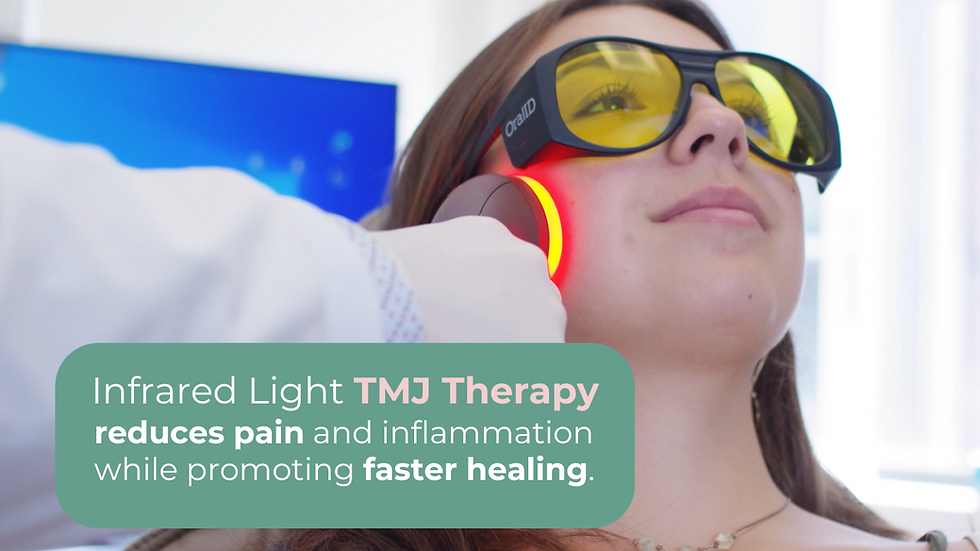
When symptoms persist, advanced — still non-surgical — therapies come next. These include infrared light TMJ therapy, which uses targeted light energy to reduce inflammation and relax overworked muscles, and therapeutic Botox for overactive jaw muscles. Surgery is reserved for the small minority of cases with significant structural joint damage. Dr. Lazare's role is to sequence these options sensibly — beginning with the least invasive and coordinating any restorative work through cosmetic and biomimetic dentistry so that form and function are addressed together.
When to Seek Professional Help
Jaw pain or stiffness lasting more than one to two weeks, or getting worse
A jaw that locks open or closed, even briefly
Difficulty eating, speaking, or opening the mouth normally
Joint sounds that are new, painful, or accompanied by a change in your bite
Ear pain or ringing without an ear infection
Swelling of the jaw with fever — this warrants urgent medical care
If any of these apply, an evaluation is the sensible next step — conservative treatment started early is very often all that is needed. You can learn more about the practice's approach through its cosmetic dentistry and infrared light TMJ therapy pages, or contact the office to schedule a consultation.
FAQs About TMJ Disorder
What is the difference between TMJ and TMD?
TMJ is the temporomandibular joint itself — the hinge connecting the lower jaw to the skull. TMD (temporomandibular disorder) is the umbrella term for pain or dysfunction affecting that joint, its disc, and the surrounding muscles.
What are the main symptoms of TMJ disorder?
The most common symptoms are jaw pain or tenderness, clicking or popping sounds, limited jaw movement or locking, ear pain or ringing, frequent temple headaches, changes in how the teeth fit together, and fatigue in the facial, neck, and shoulder muscles.
What causes TMJ disorder?
Common causes include teeth grinding and clenching (bruxism), jaw injury, arthritis within the joint, stress-driven muscle tension, and bite problems that load the joint unevenly. In most patients, several factors contribute together.
Can TMJ disorder go away on its own?
Mild cases often improve with rest, a softer diet, stress management, and avoiding habits like gum chewing. If pain, stiffness, or joint sounds persist beyond a couple of weeks — or if the jaw locks — a professional evaluation is recommended.
How is TMJ disorder diagnosed?
Diagnosis combines a detailed history, a physical exam of the joint and muscles — including range of motion and joint sounds — and, where needed, imaging such as X-rays, cone beam CT, or MRI to assess the joint structures and disc.
What are the best treatments for TMJ disorder?
Conservative treatments come first: custom occlusal splints or nightguards, physical therapy, short-term anti-inflammatory medication, and stress management. Advanced non-surgical options include infrared light TMJ therapy and therapeutic Botox for overactive jaw muscles; surgery is reserved for severe structural cases.