EMFACE vs. Botox: Which Is Right for You? (2026)

Few comparisons in aesthetic medicine generate as much confusion as EMFACE vs. Botox. Both are non-surgical. Both are offered in the same practices, sometimes by the same providers. And both are frequently discussed in the same breath when patients search for ways to look more rested, refreshed, and lifted without downtime.

But EMFACE and Botox work in diametrically opposite ways — and understanding that difference is the foundation of making a good decision about which one belongs in your treatment plan.
This article compares both treatments head-to-head: what each does, what each treats best, where each falls short, and — crucially — why the most clinically sophisticated answer for many patients is not either/or, but both.
At Lazare Biomimetic Dentistry & Smile Design on the Upper East Side, EMFACE is offered alongside a comprehensive approach to facial aesthetics that positions every treatment within the broader context of oral health, jaw function, and natural-looking results. That context matters here — particularly when it comes to how Botox intersects with jaw muscle management.
EMFACE vs. Botox at a Glance
EMFACE | Botox | |
Mechanism | Strengthens & tones facial muscles + RF collagen stimulation | Temporarily relaxes targeted muscles via neurotoxin |
What it targets | Muscle tone loss, skin laxity, forehead, cheeks, midface | Dynamic wrinkles, overactive muscles, brow position |
Needles | None — fully non-invasive | Yes — injection-based |
Sessions | 4 sessions × ~20–30 min | Single session; repeated every 3–4 months |
Onset | Progressive; peak results at ~3 months | 3–7 days |
Longevity | 12–18 months | 3–4 months per treatment |
Downtime | None | None to minimal |
Best for | Lifting, toning, structural rejuvenation | Smoothing dynamic lines, brow shaping, jaw slimming |
Pain level | None — mild contraction sensation | Mild — brief injection discomfort |
What Is EMFACE?
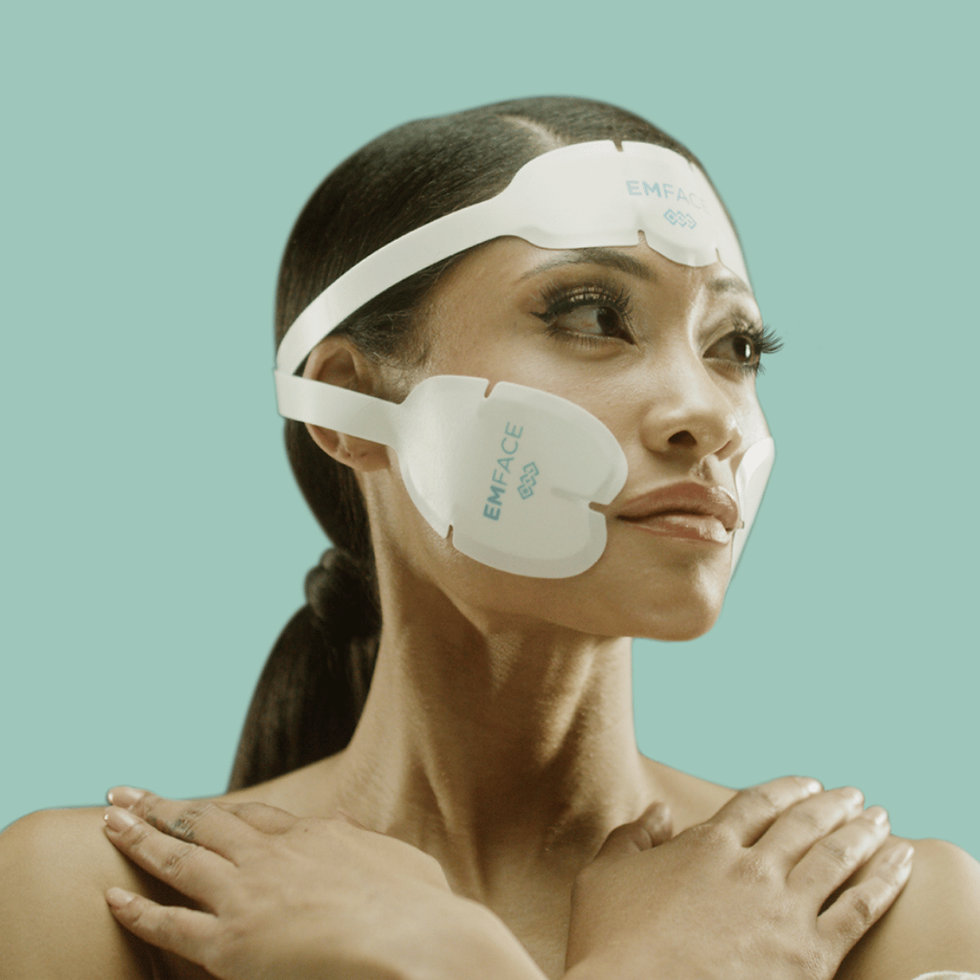
EMFACE is a non-invasive facial rejuvenation device developed by BTL Aesthetics and FDA-cleared in 2022. It delivers two synchronized energies through applicators placed on the skin:
Radiofrequency (RF) heats the dermis to stimulate collagen and elastin production, improving skin firmness and overall quality at the surface level.
HIFES™ (High-Intensity Facial Electromagnetic Stimulation) induces supramaximal contractions in specific facial muscles — the frontalis (forehead), zygomaticus (cheeks), and risorius (smile area) — building muscle fiber density and tone over the course of a four-session treatment series.
The result is a treatment that addresses two of the primary structural drivers of facial aging: muscle atrophy and skin laxity. A standard course involves four sessions of approximately 20–30 minutes each, spaced one week apart. There are no needles, no numbing cream, and no recovery period. Patients leave each session looking exactly as they arrived.
Clinical studies report an average 37% reduction in wrinkles, 23% lifting effect, and 30% increase in muscle tone following a complete treatment course.
Read more about how EMFACE treats TMJ without injections — an important consideration for patients managing jaw tension alongside cosmetic goals.
What Is Botox?
Botox (onabotulinumtoxinA) is an injectable neurotoxin produced by Allergan Aesthetics that has been FDA-approved for cosmetic use since 2002. It works by temporarily blocking the nerve signals that cause targeted muscles to contract, resulting in relaxation of those muscles and smoothing of the overlying skin.
In cosmetic applications, Botox is most commonly used to treat:
Dynamic wrinkles — lines caused by repetitive muscle movement, such as forehead lines, glabellar lines (between the brows), and crow's feet
Brow shaping — lifting or reshaping the brow arch by relaxing specific muscles that pull the brow downward
Lip lines and lip flip — subtle enhancement of the lip border
Bunny lines — wrinkles on the nose
Chin dimpling — relaxing the mentalis muscle
Neck bands — relaxing the platysma muscle for a smoother neck appearance
Jaw slimming and TMJ management — relaxing the masseter muscle to reduce jaw width and relieve grinding and clenching
Botox results onset within 3–7 days, peak at approximately two weeks, and last 3–4 months on average. Regular maintenance is required to sustain results.
The Core Difference: Strengthening vs. Relaxing
This is the most important conceptual distinction between the two treatments — and the one that most marketing materials gloss over.
Botox relaxes muscles. It achieves its cosmetic effects by reducing or eliminating muscle activity in targeted areas. This smooths the skin above those muscles, preventing the repetitive contractions that create and deepen dynamic wrinkles. The muscle itself becomes temporarily less active.
EMFACE strengthens muscles. It achieves its effects by stimulating supramaximal contractions in the lifting muscles of the face, building tone and fiber density over time. Think of it as a resistance workout for the facial muscles — the muscle becomes more active and structurally stronger.
These are not competing approaches to the same problem. They are complementary approaches to different problems that often coexist in the same face.
As faces age, two things happen simultaneously. The overactive muscles — particularly the depressors and muscles of repetitive expression — create lines and wrinkles through constant use. And the underactive lifting muscles — the frontalis, zygomaticus, and cheek elevators — lose tone and volume, contributing to drooping, flattening, and loss of definition.
Botox addresses the overactive muscles. EMFACE addresses the underactive ones. Used intelligently together, they address the full muscular landscape of facial aging.
What Botox Does Better
Botox remains the gold standard for several specific concerns that EMFACE does not address:
Dynamic wrinkle treatment. For established forehead lines, crow's feet, and glabellar lines caused by repetitive muscle movement, Botox is the most effective and immediate solution available. EMFACE improves skin quality and firmness but cannot prevent the muscle contractions that create these lines.
Rapid results. Botox works within days. For patients with an event, occasion, or deadline, EMFACE's 3-month progression timeline simply isn't applicable. Botox is the answer when speed matters.
Precise muscle targeting. Botox allows for highly specific dosing and placement — an experienced injector can lift a brow by 1–2mm, reshape the arch, or soften a specific line with millimeter-level precision. EMFACE works across larger muscle groups and cannot replicate this specificity.
Jaw slimming and masseter management. For patients with an enlarged masseter muscle — whether from bruxism, clenching, or natural anatomy — Botox injections into the masseter slim the lower face and provide significant relief from jaw-related tension. This is a distinct application that EMFACE does not replicate. Learn more about Masseter Botox for TMJ and bruxism at our Upper East Side practice.
Longevity of effect per session. While EMFACE results last longer overall (12–18 months vs. 3–4 months per Botox session), each Botox session produces rapid, predictable, and repeatable results with very little effort or time commitment.
What EMFACE Does Better
No needles. For patients with needle anxiety, a strong aversion to injectables, or those seeking a genuinely needle-free facial rejuvenation approach, EMFACE is one of very few treatments that delivers meaningful lifting and tightening results without any form of injection. This is a significant differentiator.
Muscle toning and lifting. EMFACE addresses the loss of muscle tone and volume in the lifting muscles of the face — a driver of aging that Botox cannot treat and in some cases may accelerate (by reducing activity in surrounding muscle groups). The structural lift and cheek fullness that EMFACE builds comes from genuine muscle hypertrophy, not injection of any substance.
Skin quality improvement. The RF component of EMFACE improves collagen and elastin density in the dermis, producing improvements in skin firmness and texture that standard Botox does not provide.
Longer intervals between treatments. A four-session EMFACE course produces results lasting 12–18 months. Botox requires retreatment every 3–4 months to maintain results. For patients who prefer fewer treatment visits per year, EMFACE's maintenance schedule is less demanding.
No risk of migration or heaviness. Botox, when administered incorrectly or in excessive amounts, can cause brow heaviness, ptosis, or an unnatural frozen appearance. EMFACE carries none of these risks — it works with the body's own muscle physiology rather than inhibiting it.
For a thorough self-assessment of EMFACE candidacy, read are you a good EMFACE candidate.
EMFACE as a Needle-Free Alternative to Botox
A meaningful segment of patients considering Botox are not primarily motivated by wrinkle treatment — they want to look more lifted, more refreshed, and less fatigued, without the maintenance cycle that Botox requires or the psychological barrier of regular injections.
For this patient profile, EMFACE is a compelling alternative. It addresses facial laxity and tone loss — two of the most visible markers of facial aging — without a single needle. The results are progressive rather than immediate, but they are structural and lasting in a way that Botox, by its nature, cannot be.
It's worth being clear about what EMFACE cannot replicate from Botox: it will not smooth established dynamic wrinkles, it will not reshape a specific muscle group with injection-level precision, and it will not deliver visible results within a week. Patients who genuinely need wrinkle treatment alongside lifting will likely benefit from both approaches rather than substituting one for the other.
But for the patient who simply wants to look like a refreshed version of themselves — with better cheek definition, a lifted brow, and improved skin quality — and who wants to achieve this without needles, EMFACE is one of the strongest options currently available.
Better Together: Using EMFACE and Botox as a Combination
The most clinically sophisticated approach for many patients is not choosing between EMFACE and Botox, but understanding how each fits within a coordinated treatment plan.
A well-designed combination protocol might look like this:
EMFACE addresses the lifting muscles — building tone in the frontalis, zygomaticus, and cheek elevators to create structural lift and midface volume
Botox addresses the depressor muscles — relaxing the corrugator, procerus, and orbicularis to smooth lines and allow the lifting muscles that EMFACE has strengthened to work without opposition
This combination mirrors what skilled oculoplastic surgeons and facial plastic surgeons achieve — balancing the lifting and depressing forces of the face — but through entirely non-invasive means.
Separately, for patients managing bruxism or jaw tension, Masseter Botox for TMJ and bruxism in the lower face can be paired with EMFACE's upper and midface stimulation — treating overactive jaw muscles while simultaneously toning the lifting muscles of the cheeks and forehead.
The timing of combination treatments matters. Most providers recommend completing an EMFACE course before or separately from Botox, to allow the muscle stimulation results to establish before introducing muscle relaxation in adjacent areas. Your provider can assess the appropriate sequencing for your individual anatomy and goals.
Who Is a Good Candidate for Each?
EMFACE is well-suited for patients who:
Have early to moderate facial laxity and muscle tone loss
Notice brow heaviness, cheek flattening, or loss of definition in the midface
Prefer a needle-free, zero-downtime treatment
Are seeking maintenance and prevention rather than correction of established lines
Have needle anxiety or wish to minimize the number of injectable treatments they undergo
Want to extend the interval between Botox sessions by addressing the lifting muscles independently
Botox is well-suited for patients who:
Have established dynamic wrinkles (forehead lines, crow's feet, glabellar lines)
Want rapid, predictable results for a specific event or deadline
Need precise muscle targeting — brow shaping, lip border, chin
Are managing masseter hypertrophy, jaw clenching, or bruxism
Are comfortable with a regular maintenance schedule
Both together suit patients who:
Want comprehensive facial rejuvenation addressing lines, laxity, and muscle tone simultaneously
Are in their late 30s–50s with a combination of dynamic wrinkles and structural laxity
Want to look naturally refreshed rather than treated
Are interested in the most complete non-surgical approach available
Learn more about the aesthetic philosophy behind the art of natural-looking aesthetic dentistry at our practice.
EMFACE in NYC at Lazare Biomimetic Dentistry & Smile Design
At Lazare Biomimetic Dentistry & Smile Design, EMFACE is offered as part of a broader aesthetic framework — one in which the face, the jaw, and the smile are understood as an interconnected system rather than isolated concerns.
Dr. Marc Lazare, M.A.G.D., brings the same minimally invasive, precision-led philosophy to facial aesthetics that guides every restorative dental case at the practice. The goal is always a natural-looking result — one that reflects the patient's best self rather than announcing that a treatment was performed.
For patients managing both cosmetic and functional concerns — jaw tension, bruxism, TMJ dysfunction alongside aesthetic goals — the combination of EMFACE and Masseter Botox offers a clinically coherent approach that addresses both the lifting muscles of the upper face and the overactive musculature of the jaw.
📍 115 E 61st Street, Suite 14A, Upper East Side, Manhattan📞 212-861-2599
Frequently Asked Questions
Is EMFACE the same as Botox?
No — they work in opposite ways. Botox relaxes targeted muscles by blocking nerve signals. EMFACE strengthens facial muscles through electromagnetic stimulation and simultaneously improves skin quality through radiofrequency energy. They treat different aspects of facial aging and can be highly complementary when used together.
Can EMFACE replace Botox?
For patients whose primary goal is lifting, toning, and skin quality improvement without needles, EMFACE can serve as a meaningful alternative to some Botox treatments. However, EMFACE cannot replicate Botox's ability to smooth established dynamic wrinkles, reshape specific muscle groups with injection-level precision, or deliver results within days. For comprehensive facial rejuvenation, many patients benefit from both.
Is EMFACE better than Botox for lifting?
For structural lifting — improving the tone and volume of the lifting muscles of the midface and forehead — EMFACE offers a unique mechanism that Botox cannot replicate and may actually complement. Botox can contribute to brow lifting through targeted relaxation of depressor muscles, but cannot build muscle tone. For the lifting question specifically, EMFACE addresses the muscular foundation in a way no injectable currently can.
Can you get EMFACE and Botox at the same time?
Most providers recommend spacing the two treatments rather than performing them simultaneously, to allow the effects of each to establish independently. The sequencing depends on your individual anatomy, goals, and treatment history. Your provider can assess the appropriate timing during a consultation.
Does EMFACE hurt?
No — EMFACE is consistently described as comfortable. The sensation is a gentle warming of the skin combined with rhythmic muscle contractions that feel unusual but not painful. No numbing cream is required. Patients typically rest, read, or use their phone during sessions.
How long does EMFACE last compared to Botox?A standard four-session EMFACE course produces results lasting approximately 12–18 months. Botox results last 3–4 months per treatment, requiring three to four sessions per year to maintain outcomes. EMFACE requires significantly less frequent maintenance, making it a lower-commitment option from a scheduling perspective.